2118
100 years have passed, and the earth is caught in unavoidable darkness. The year is 2118 and the world is about to collapse in power struggle, nuclear war, colonization and environmental disasters. The indigenous peoples have found a way to create their own sanctuaries hidden from the dark colonial power led by the power-hungry world chancellor Ola Tsjudi. The Sámi peoples’ sanctuary is at Gállogieddi, where they are trying to build a new world for themselves. The combination of new quantum technology and the rediscovery of the ancient Sámi belief have enabled society to return pioneers from ancient times. Over the years, much of the Sámi tradition and wisdom have disappeared in the struggle to survive as people. The pioneers are retrieved from the Saivo (the land of the dead) to assist in the creation of a peaceful, well-organized society. (Márkomeannu)
During Márkomeannu 2118, posters from the festival’s past editions were hung on the rear walls of the market stands, using the posters to convey a firm political position against colonization and the 15 injustice it fosters. Resorting to street-art graffiti style, the organizers wrote over the poster the following expressions: #ČSV, #2118, #meannu2118, #Ráfi Olggos, “resilience”, “together we rise”
The 2018 edition of the festival hinged upon an Indigenous science-fiction plotline that projected festival-goers 100 years into the future. This concept was implemented by means of site-specific sound installations and scenography. Included in the latter, linguistic signs contributed to the implementation of the plotline while also functioning as references to contemporary challenges faced by Sámi communities across Sápmi.
Ráfi Olggos literally translate as “peace out”508 and is a Sámi transposition of this English slang expression.
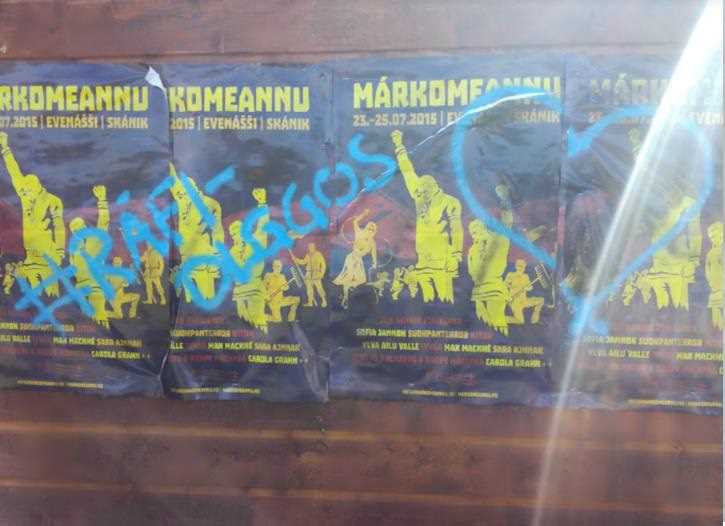
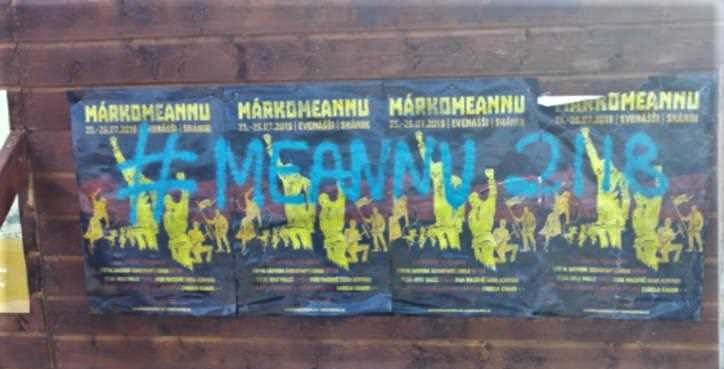
#meannu2118
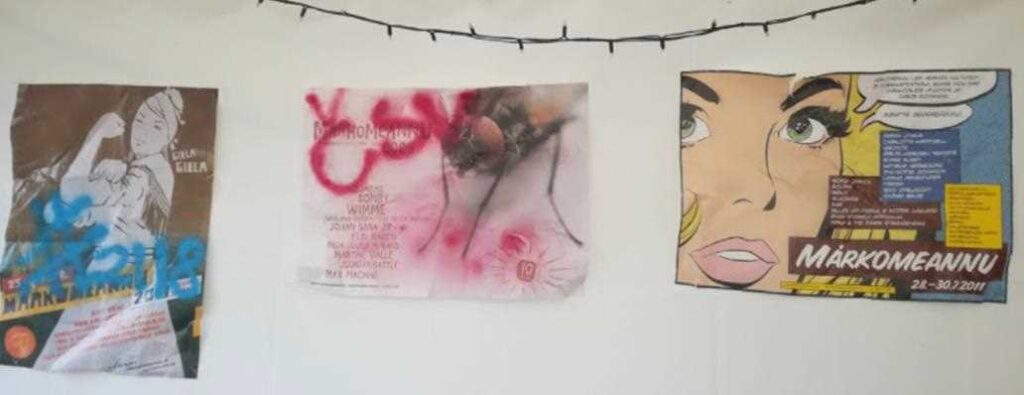
The acronym ČSV is here easily identifiable and highly recognizable.
In Sámi contexts, even those who do not master any Sámi language know the meaning of these three letters and the message they carry. ČSV developed as a political slogan by the Maze group in the 1970s, during the Alta uprising. The polysemy of this acronym made it a particularly versatile symbol. The most common reading of this acronym is Čájet Sámi Vuoiŋŋa, i.e. “show Sámi spirit”. The underlying idea is that, despite the oppression and marginalization endured by Sámi people in the past, today young Sámi can and shall be proud of their cultural background.
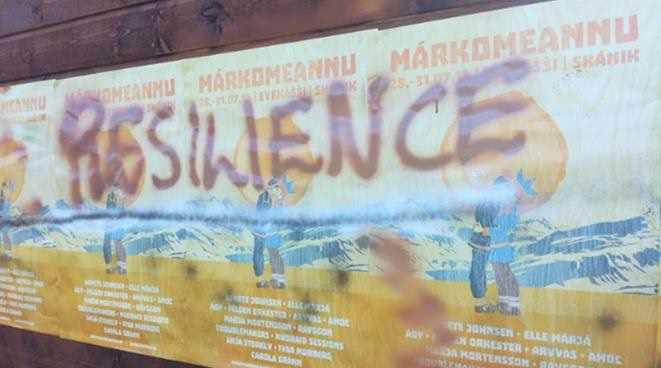
the “resilience” concept was part of a wider discourse on self-determination and self-representation, connecting it with the Sámi history of oppression and the recent movements aimed at deconstructing colonial narratives concerning the Sámi.
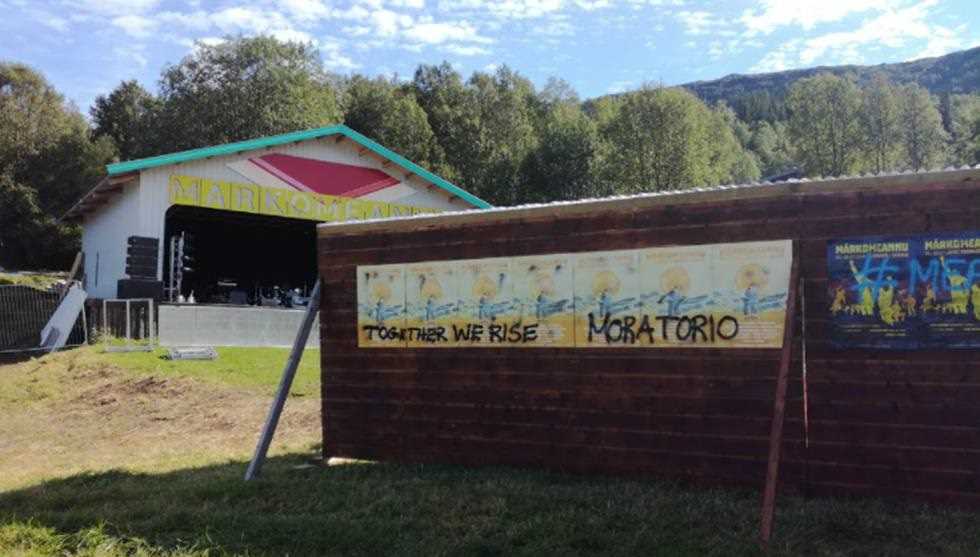
the slogan Moratorio is relatively recent. It refers to Ellos Deatnu (Long Live Deatnu) Indigenous resistance and resurgence movement. The connections between this movement and Márkomeannu are well-established: In 2012, at Márkomeannu a seminar around the Alta case and the subsequent ethno-political work of Sámi activists was held. The seminar was entitled Ellos eatnu! La elva leve. In 2017, a delegation from the Ellos Deatnu attended Márkomeannu.
On the summer solstice 2017, this movement set up a camp on the island of Čearretsullo in the river Deatnu/Tana, not far from the village of Ohcejohka/Utsjoki on the northernmost area of the Finnish side of Sápmi. They concurrently founded the Čearretsullo Siida, and declared a moratorium on recreational fishing in the Deatnu/Tana waters while also proclaiming the autonomy of the island and the surrounding waters. Their political statements declared that no longer the Finnish state but customary Sámi law was to regulate life on the island. As Sámi scholar Rauna Kuokkanen argues, this declaration of Sámi sovereignty implied that fishing licenses purchased by tourists from the state were considered no longer valid by the members of this activists’ siida. Hence, those who had purchased the Finnish-issued permits “were expected to ask permission to fish from local Sámi and especially those families whose traditional fishing sites are in question”